Korea Consumer Agency warns of misleading claims in popular Korean sunscreens
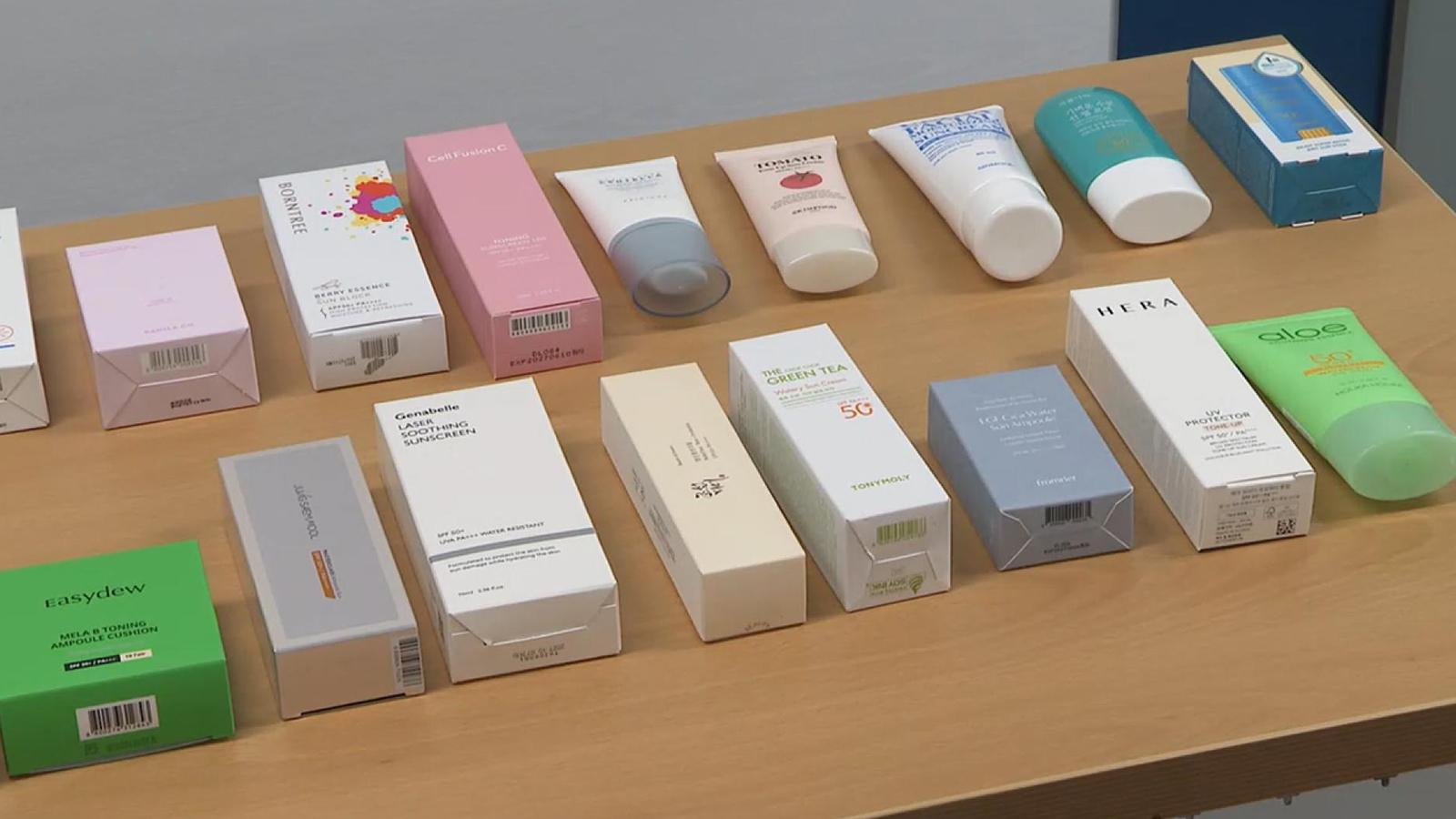
The Korea Consumer Agency conducted an investigation into 38 sunscreens available in the domestic market and found several marketing and labelling issues that could mislead consumers.
Korea Consumer Agency audits domestic sunscreen market
The Korea Consumer Agency (한국소비자원) is a publicly funded, quasi-governmental organisation under the Fair Trade Commission dedicated to protecting consumer rights through initiatives like product testing, market monitoring, and policy research.
Recently, the agency conducted an investigation into 38 sunscreens available in the domestic market. The investigation confirmed the safety of these products, but also revealed several issues related to label claims, functional testing and ingredient labelling, raising concerns about marketing practices in the Korean beauty industry.
Below the full list of the 38 investigated products:
AHC – Masters Air Rich Sun Stick SPF50+/PA++++ 22g [formulated and manufactured by: Kolmar Korea, distributed by: Carver Korea]
Skin1004 – Madagascar Centella Hyalu-Cica Water-Fit Sun Serum SPF50+/PA++++ 50ml [formulated and manufactured by: Kolmar Korea, distributed by: Skin1004]
Skinfood – Tomato Tone Up Sun Cream SPF50+/PA+++ 50ml [formulated and manufactured by: Cosmax, distributed by: Skinfood]
Tonymoly – The Chok Chok Green Tea Watery Sun Cream SPF50+/PA+++ 50ml [formulated and manufactured by: Megacos, distributed by: Tonymoly]
Three sunscreens failed to substantiate key marketing claims
Among the findings, three sunscreens were found to lack sufficient evidence to support their marketing claims. The sunscreens in question include:
Borntree’s “Berry Essence Sun Block”, which claimed to soothe the skin and prevent skin aging but did not provide substantiation for these claims.
Tonymoly’s “The Chok Chok Green Tea Watery Sun Cream”, which was marketed as hypoallergenic and non-irritating without any supporting evidence.
Fromrier’s “EGF Cica Water Sun Ampoule”, which claimed to help with breakouts without any supporting evidence.
Two sunscreens flagged for unapproved functional claims
In addition, two other sunscreens were flagged for making unapproved functional claims. In Korea, “Functional Cosmetics” are defined as a category of cosmetics with specific functions that help alter the condition of skin or hair, as opposed to products that are simply hydrating. “Functional Cosmetics” are subject to pre-market testing and approval to confirm the safety and clinical effectiveness of the product.
In this case, the two sunscreens in question made regulated functional claims without the necessary official certifications. The problematic sunscreens include:
Sidmool’s “Ultra Facial Moisturizing Suncream”, which made skin whitening claims (a regulated functional claim) without being approved as a functional whitening cosmetic.
Enesti’s “UV Cut Perfect Sun Stick”, which was advertised as suitable for water sports, despite not being tested for water resistance.
Efficacy misrepresentation and labelling inconsistencies
Another sunscreen, Round Lab Birch’s “Juice Moisturizing Sun Cream”, was found to make ambiguous claims regarding the properties of certain ingredients that could mislead consumers about the efficacy of the sunscreen.
In the marketing materials for the sunscreen, the brand wrote that Portulaca Oleracea Extract provided a soothing effect and that Resurrection Plant provided a hydrating effect, but they didn’t include any clear disclaimer to indicate that these claims referred only to the properties of the raw materials and not the final product itself.
Lastly, Dr.Jart+’s “Every Sun Day Moisturizing Sun” showed discrepancies between the ingredient list found online and the one on the product label.
Concerns over 4-methylbenzylidene camphor (4-MBC)
The investigation also found that four sunscreens were formulated with 4-methylbenzylidene camphor (4-MBC), a UV filter that is set to be banned in the EU from 2026 due to concerns over its potential endocrine-disrupting effects.
The UV filter is still allowed in South Korea at concentrations of up to 4%, however the Korean Ministry of Food And Drug Safety (MFDS) is currently conducting additional risk assessments on 4-MBC, which may lead to a potential ban in the near future. In the meantime, the Korea Consumer Agency has recommended that cosmetic companies stop formulating products using 4-MBC. The sunscreens that were found to contain 4-MBC include:
Tonymoly’s “The Chok Chok Green Tea Watery Sun Cream”, containing 3% 4-MBC.
All sunscreens contained 4-MBC within the legal limits, however one sunscreen (Innolab’s “California Aesthetic Premium Multi-Protection Sun Crème”) failed to list 4-MBC in its ingredient list.
No safety concerns found among tested sunscreens
Despite the issues identified, all tested sunscreens were confirmed to meet domestic regulatory concentration limits for UV filters, and none of the 38 products contained detectable levels of heavy metals like benzene, lead, arsenic, mercury, antimony, cadmium, or nickel.
The Korea Consumer Agency did not test for SPF or water resistance claims.
Odile Monod is a Korea-based art director with an extensive background in the beauty industry, having worked for internationally renowned conglomerates across Europe and Asia. Her long-standing passion for Korean beauty led her to create The Monodist, a platform where she shares her expertise and industry knowledge with those who want to better understand and navigate the complex world of K-Beauty.